
As we move through 2026, aftersales leaders are facing a familiar but intensifying challenge: how do you deliver greater efficiency and profitability without compromising the customer experience that keeps people coming back? How do you maintain workshop performance when skilled labour is harder to find, EVs require less servicing, and customers are holding onto their vehicles for longer? And crucially, how do you protect margin when operational costs continue to rise?

These pressures are forcing retailers to rethink how every ramp, every repair and every customer interaction is managed. Increasingly, the answer lies in deeply integrated, best‑in‑class digital solutions that remove friction, unlock productivity and elevate the service experience.

The skilled labour challenge

Technician shortages remain one of the toughest issues. Unlike other roles, technicians can’t easily be recruited from outside the industry, so the priority must be maximising the productivity of the resource you already have while developing apprentices for the future. Tight, well‑designed processes and integrated systems in the workshop are essential to reducing wasted time and ensuring every hour counts.

Service Advisors, on the other hand, can be recruited from other sectors but only if the systems they use are intuitive and supportive. Their role can at times be stressful and customer‑facing so digital tools should simplify their workload, reduce admin, and give them more time to build relationships. Frictionless integrations benefit both the user and the customer.

Reduced EV servicing opportunities

EVs bring fewer moving parts, fewer serviceable components and longer intervals meaning fewer natural touchpoints. To protect revenue, retailers must maximise the value of every visit. This includes offering relevant add‑ons such as key‑fob battery replacements or valeting, supported by a robust eVHC process with consistent follow‑up. Customers still expect expertise, reassurance and transparency and the right digital tools at the right time can help retailers deliver exactly that.

Customers keeping cars longer

With the 1–3 year service parc shrinking and the 4–6 year parc growing, long‑term customer retention is becoming critical. This is the moment to strengthen relationships beyond the warranty period. Retailers must avoid losing customers to competitors for tyres, glass or cosmetic repairs because once they leave, they rarely return.

Technology can play a key role in building trust with customers: clear communication, transparent pricing, and tools like digital triage that support first‑time‑fix outcomes all reinforce confidence and loyalty.

Rising operational costs

Energy, consumables and overheads continue to climb for everyone, putting pressure consumers disposable income and organisational margins. Digitisation, from electronic job cards to paperless check‑ins, reduces waste and streamlines operations. Every manual process removed is time and cost saved.

In 2026, the retailers who win will be those who turn routine servicing into remarkable customer experiences. By embracing integrated digital solutions, aftersales teams can drive revenue, boost efficiency and deliver an experience today’s drivers expect.

Learn more about how our aftersales solutions can benefit you.
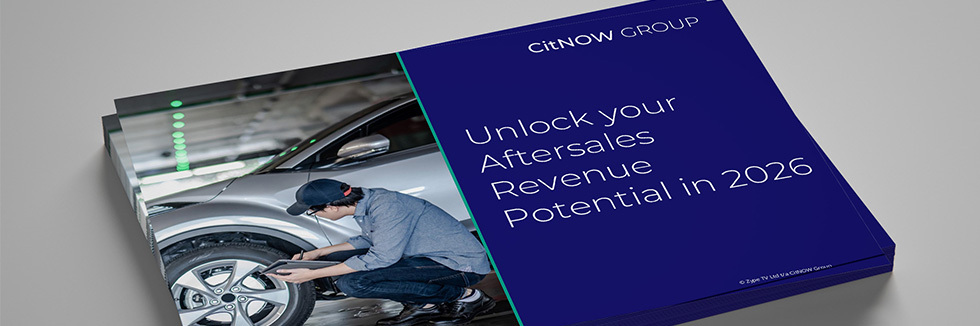
Ramp up your service experience. Future proof your workshop revenue.

The automotive aftersales landscape is shifting faster than ever, and rising customer expectations now demand greater scale, smarter innovation, and data driven solutions.

Unlocking Aftersales Revenue Potential explores the ongoing transformation of the aftersales journey and how you can stay-ahead by adopting next generation tools designed to streamline operations, boost efficiency, and enable more informed decision making. We want you and your teams to feel empowered to deliver an optimal experience so your customers fall in love with aftersales and keep coming back..

How we drive revenue potential in Aftersales:

Our customer promise is simple: transparent pricing, trust and continuous investment in technology.

Learn more in our guide.

UK automotive aftersales is being reshaped by five market forces: cost‑of‑living pressures, rapid digital adoption, the EV service shift, affordability and a resilient market outlook despite short‑term headwinds. Consumers are delaying repairs, seeking cheaper options and want a convenient, digital-first service model. At the same time, dealers face skilled‑labour shortages, workshop capacity constraints and fragmented technology that limits upsell and profitability.

Routine services don’t have to feel routine. Servicing or repair work is often viewed as an inconvenience, but a workshop visit can become a seamless, customer-first experience through digitised processes like home check-in, real-time updates via WhatsApp, and personalised videos explaining work while the car is on the ramp.

As customers increasingly expect Amazon-like convenience – flexible scheduling, transparent communication and instant updates – online booking must become a core part of the aftersales experience. Without an integrated platform, workshop teams waste time switching between systems, hurting efficiency and satisfaction. A unified digital approach turns a necessary service into a standout experience that builds trust and loyalty.

Our latest report findings identified a ‘data gap’ to revenue for dealerships.

  • Only 48% reported they were very satisfied with their aftersales tech.
  • Only 26% said they get excellent value from their customer data.
  • 100% agreed that easy access to all customer & vehicle data in one place would boost annual revenue, and 87% said a single, integrated 360° view is very important or critical, but with many lacking real‑time capabilities.
  • To grow aftersales revenue, top priorities for dealerships were to reduce no‑shows (28%), to have well‑timed contact centre outreach (28%), and to increase technician availability (26%).
  • 26% named improving aftersales tech as a top priority for the next 3–5 years.

A unified data approach and automated workflows are no longer “nice to have.” Aftersales is a strategic growth engine, not a cost centre, where loyalty is earned and lifetime value multiplied, but only if you remove friction, add transparency and make communication effortless.

CitNOW Group transforms aftersales efficiency and CX through RTC Aftersales, CitNOW Triage, CitNOW Workshop, CitNOW Marketing360, and CitNOW Insights -standalone or integrated into a complete ecosystem.

Proven results:

  • Up to 65% fewer repeat visits
  • 25% more online bookings
  • 33% faster response times
  • £50K+ annual VHC revenue uplift per site
  • £12K paperless savings and 100+ hours saved per site/year

Price sensitivity shifts decisions to timing, transparency and trust. If you can pre‑diagnose, plan parts, and communicate options (incl. remanufactured parts and loyalty benefits) before the visit, you reduce friction, increase first‑time‑fix, and prevent repeat visits, protecting CSI and margin.

CitNOW Triage enables issue symptom capture for accurate pre-diagnosis and resource planning. Integrated with RTC, which manages the entire aftersales journey, from booking to eVHC inspections and workshop operations, it eliminates double keying and boosts first-time-fix rates. One site saw a 457% increase in Triage links sent and 400% more completed returns post-integration.

CitNOW Marketing360 automates multi-channel outreach to reduce no-shows and keep diaries full, while CitNOW Insights delivers real-time KPIs and EV dashboards for smarter decisions. CitNOW Workshop builds trust and speeds response through personalised video, creating a connected journey from booking to completion.

Aftersales isn’t just about fixing vehicles. It’s about creating experiences customers remember. By unifying data, automating workflows, and embracing digital-first communication, dealerships can turn routine servicing into something remarkable – ramping up the service experience and building relationships that last.

Learn more on how we can help elevare your Aftersales operations.